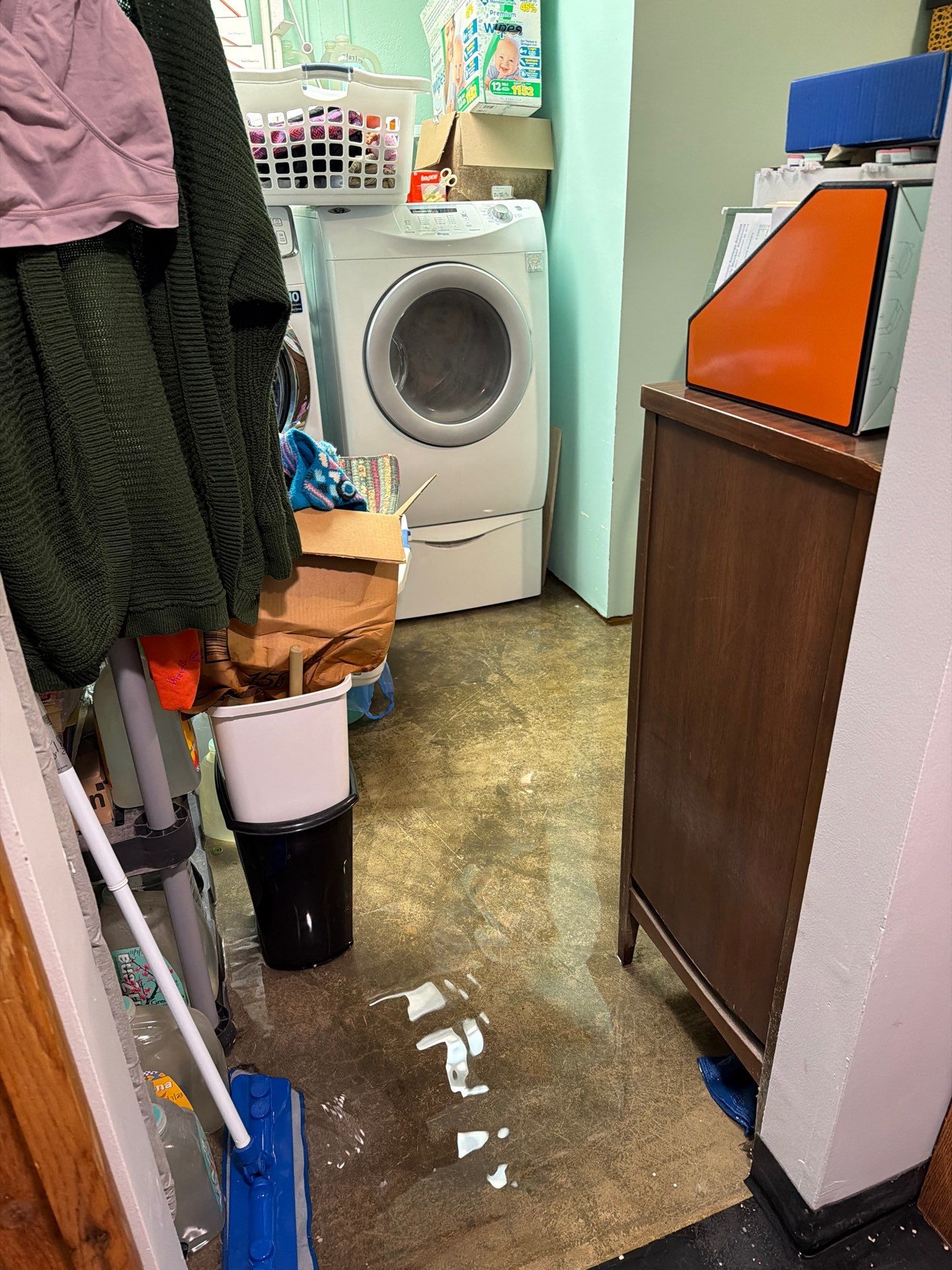
Why Sewage Backups Are Not a DIY Job in Glen Oaks Commons
Before any homeowner decides to grab a wet vac and start pulling sewage out of a basement, you need to understand exactly what you are touching. Sewage water carries E. coli, hepatitis A, rotavirus, giardia, and a long list of bacterial and parasitic threats that survive on porous surfaces for days. In Glen Oaks Commons, where many homes built before 1980 still tie into combined sewer systems, a single backup can include water from neighboring properties as well as your own. That is not water you wipe up with towels.
The other factor most homeowners miss is absorption rate. Carpet pad acts like a sponge. Drywall wicks moisture upward roughly one inch per hour for the first several hours. Particleboard subfloor swells and delaminates. By the time the visible water is gone, the contamination has already moved into materials you cannot see. Proper sewage cleanup is not about removing the puddle. It is about removing every porous material that absorbed Category 3 water, disinfecting the structural surfaces underneath, drying to a measurable moisture content, and verifying the air is safe to breathe again.
There is also a structural dimension homeowners rarely consider until it is too late. Sewage that sits against a wood-framed wall cavity for more than a few hours will saturate the bottom plate, wick into the studs, and soak the back side of the drywall where you cannot see it. The same water travels along the seam between the slab and the framing, following gravity into any crack or expansion joint. We routinely pull baseboards in Glen Oaks Commons homes and find black staining a foot above the visible water line, weeks after the homeowner thought the problem was handled. That hidden migration is what separates a contained loss from a full reconstruction.
The table below is the comparison we walk Glen Oaks Commons homeowners through on the phone before we dispatch a crew. It is the honest version of what you are weighing.
DIY Cleanup vs Professional Sewage Restoration: The Full Comparison
| Factor | DIY Attempt | Professional IICRC Cleanup |
|---|---|---|
| Water Category Handling | No category assessment, treats all water the same | Confirms Category 3, documents for insurance, follows S500 and S520 standards |
| Personal Protective Equipment | Gloves and maybe a dust mask | Full Tyvek suits, P100 respirators, nitrile, eye protection, boot covers |
| Extraction Equipment | Shop vac (15 gallon) pulling 50 to 70 CFM | Truck-mounted or portable extractors pulling 150+ CFM with HEPA filtration |
| Porous Material Decisions | Often kept to save money, becomes mold source later | Carpet, pad, drywall up to flood line, insulation removed and disposed as biohazard |
| Disinfection | Household bleach, surface only | EPA-registered antimicrobials rated for sewage, applied to studs, joists, subfloor |
| Drying Verification | Looks dry, feels dry | Moisture meters, thermal imaging, daily readings logged until materials hit dry standard |
| Air Quality | Open windows and hope | HEPA air scrubbers, negative air containment, post-remediation verification |
| Insurance Documentation | Photos on a phone, no scope | Itemized scope, moisture logs, photo documentation, direct adjuster communication |
| Typical Out-of-Pocket Cost | $200 to $800 in supplies, plus future mold remediation of $3,000 to $10,000 | $2,500 to $10,000 for full cleanup, typically covered by sewer backup endorsement |
| Health Risk | High, including respiratory and gastrointestinal exposure | Minimal, contained and controlled |
| Timeline to Safe Reoccupancy | Unknown, often weeks of lingering odor | 3 to 7 days for most residential losses |
| Property Value Impact | Disclosable on future sale, often discounts price | Documented remediation supports clean disclosure |
Reading the Comparison Honestly
What the table reveals is that the cost gap between DIY and professional cleanup almost always closes once you factor in the secondary damage. We have seen Glen Oaks Commons homeowners spend a weekend cleaning a basement themselves, only to call us four months later when the mold remediation quote arrives at three times what proper sewage cleanup services would have cost up front. Insurance is the other piece. If you have a sewer and drain backup endorsement on your homeowners policy, which most Glen Oaks Commons carriers offer for $40 to $80 per year, the professional cleanup is usually covered minus your deductible. DIY work voids that documentation trail and frequently kills the claim.
The other reality is timing. Mold colonization on sewage-contaminated drywall begins within 24 to 48 hours in the humid conditions a wet basement creates. That window does not pause while you research equipment rentals. Every hour the materials stay wet, the scope of work grows. This is the same principle that drives our approach to basement flooding response, but with sewage the stakes are higher because you are racing biological growth, not just moisture.
One last point the table cannot capture: liability. If anyone in the home has a compromised immune system, is pregnant, is under five years old, or is over 65, the CDC and IICRC both advise against any non-professional contact with Category 3 water. That is not a marketing line. That is the standard. When a Glen Oaks Commons homeowner calls us and that is the household situation, we treat the job as urgent regardless of square footage. Larger commercial losses follow the same logic, which is why our commercial sewage cleanup protocols stay consistent across property types.
What to Do in the First Hour
If a backup is happening right now, the most useful actions are also the simplest. Stop using water inside the home, including toilets, sinks, dishwashers, and laundry, because every gallon you send down the drain adds to the volume coming up. Cut power to the affected area at the breaker if water is anywhere near outlets, cords, or appliances. Move anything dry and valuable to a higher floor, and keep children and pets out of the space entirely. Take wide photos and close-up photos before anything is touched, because those images establish the loss for your adjuster. Then call Glen Oaks Commons Water Restoration. We will dispatch a crew, walk you through what to document while you wait, and coordinate directly with your insurance carrier once we are on site assessing the scope.